home Pianoforte-makers in England


KIRKMAN
in London

1851

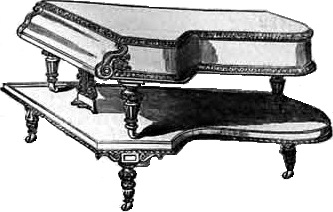
Miniature Grand Pianoforte,
The Crystal Palace, and its contents : being an illustrated cyclopaedia of the great exhibition of the industry of all nations, 1851, p. 201 (archive.org)

LONDON - "467 Kirkman, J. & Sohn, 3 Soho Square u. 9 Dean Str. – Ein MÄ vollständiges Modell eines grossen Pianofortes aus Elfenbein, mit Verbesserungen." Amtlicher Catalog der Ausstellung der Industrie-Erzeugnisse aller Völker, 1851, p. 66

LONDON - "Messrs. Kirkman and Son contribute a grand, 7 octaves, A to A, and a bichord (“fonda”) grand, 6¾ octaves, C to A, of the usual construction; also a low upright, 6¾ octaves, C to A, with three strings to each note, placed obliquely, and having also metallic bracing-bars in front of the sound-board.

The same firm also exhibits a model of a bichord grand, perfect in its construction in every respect. It has a compass of 6¾ octaves, C to G, and every note sounds the same pitch as the full-sized instrument. It has metallic bracing and string-plate, upward bearing, grand check-action, pedals, and all modern improvements. The following table of dimensions of this model and the real instrument will shew its comparative size.

  Dimens. of ordinary Bichord Grand. Dimens. of Messrs. Kirkmans' Model.
 

FT - IN.

FT. - IN.

Outside length 7 - 0 4 - 1
width 4 - 3 2 - 10
Height from the ground to top of instr. 3 - 2 1 - 8 1/2
Length of key-board 3 - 7 1/2 2 - 2 1/2
each octave 0 - 6 1/2 0 - 3 15/16
Depth of the keys from front to back 0 - 5 3/8 0 - 3 1/2

The tone of this lilliputian instrument is wonderful for its size, and the workmanship throughout is perfect." Newton's London Journal of Arts and Sciences, 1851, p. 35

LONDON - "But the greatest attraction in this department appears to be the miniature model grand of Messrs. Kirkman.

The art and science of pianoforte-making seems to be concentrated in tl'is little instrument : and were it not there to speak for itself, no one would believe it possible to produce such clear, full, and sparkling tones in so small a compass, while no difficulty seems to be avoided, having 6¾ octaves and all the modern improvements. [...]

Another improvement, also by Messrs. Kirkman, is tlie addition of metal bracings to their oblique pianofortes, and the introduction of drilled metal studs and the harmonic bar fir tiic improvement of the upper notes, so often defective in this class of instruments." The Crystal Palace, and its contents : being an illustrated cyclopaedia of the great exhibition of the industry of all nations, 1851, p. 42 (archive.org)

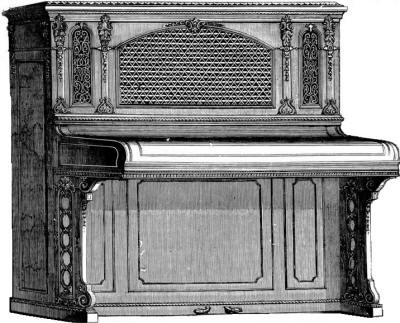
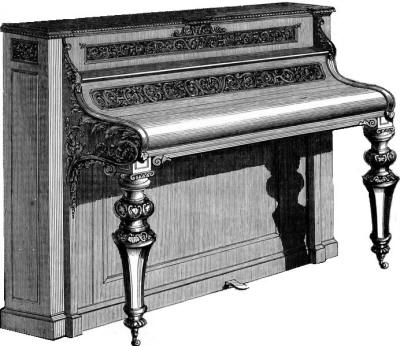
LONDON - "The oblique pianoforte, in ebony and gold, in the Italian style, with well-designed carved frets, &c., by Messrs. Kirkman,is a graceful and elegant instrument." Crystal Palace, and its contents : being an illustrated cyclopaedia of the great exhibition of the industry of all nations, 1851, p. 202 (archive.org)

LONDON - "467 Kirkman, Joseph, & Son, 3 Soho Square, and 9 Dean Street — Manufacturers. Miniature model of a grand pianoforte, six and threequarter octaves, metal braces, and drilled bridges. Seven octave, full grand pianoforte, with repetition action, in rosewood case. The fonda semi-grand pianoforte, in walnut case. Oblique piccolo pianoforte." Official description and illustrated catalogue of the Great exhibition, 1851, p. 464

LONDON - "Le nom de M. Kirkman est aussi un des plus anciens dans la facture des pianos anglais; malheureusement, de même que MM. Stodart, MM. Kirkman et fils, bien qu'ils aient suivi le mouvement général de modification des pianos, n'ont réussi que médiocrement à perfectionner la qualité et la puissance des sons de leurs instruments.

Ceux qu'ils ont mis à l'Exposition consistent en un grand piano de sept octaves (la-la), et un grand piano à deux cordes, de six octaves et une sixte, d'après le système de construction ordinaire. MM. Kirkman lui ont donné le nom de Fonda, que je ne comprends pas, à moins qu'ils ne se soient trompés sur l'orthographe, et n'aient voulu écrire funda (de fundo, lancer), ce qui pourrait indiquer quelque particularité de mécanisme que je n'ai pas aperçue.

Le grand piano à trois cordes m'a paru d'une qualité assez médiocre; le bicorde est comparativement plus satisfaisant. MM. Kirkman ont exposé aussi un petit piano droit à trois cordes obliques dont la sonorité est inférieure aux pianos français du même genre.

Enfin, on doit à MM. Kirkman un petit bijou de grand piano, dont le côté le plus long n'a que 1 mètre 16 centimètres, la largeur du clavier 80 centimètres, et qui a l'étendue de six octaves et demie (ut-sol). La puissance des sons de ce petit instrument est très-remarquable, même dans la basse.

J'ai essayé de ce piano lilliputien, mais mon petit doigt s'est trouvé trop large pour les touches. MM. Kirkman me paraissent s'être proposé de venir au secours des pianistes à la mamelle, classe d'artistes à laquelle on n'avait pas accordé jusqu'à présent l'attention qu'elle mérite peut-être." Gazette musicale de Paris, 21/09/1851, Fétis père, p. 314

LONDON - "Kirkman has sent three instruments, which appear in excellent condition, both as to quality and finish of work; his "Tom Thumb" is really a curiosity, well worth a passing notice or so." The World in Its Workshops. A Practical Examination of British and Foreign ..., 1851, p. 203

LONDON - "[...] zur Londoner Ausstellung im Jahre 1851 [...][...] Kirkman & Sohn zeichneten sich mit zwei guten Pianofortes, einem aufrechtstehenden Cottage und einem Modellin verkleinertem Massstabe aus, welches alle Verbesserungen in sich vereinigen sollte." Geschichte des Claviers vom Ursprunge bis zu den modernsten Formen dieses ..., exhibition 1851, by Oscar Paul, 1868, p. 159

1853

DUBLIN - "699 Kirkman, J. & Son, London, Inv. and Manu, Mackintosh & Co. Exhibitors. — Pianofortes of various styles and descriptions." Official Catalogue of the Great Industrial Exhibition, in connection with the Royal Dublin Society, 1853, p. 61

DUBLIN - "The contribution of pianofortes is exceedingly good, and comprises specimens from the leading maufacturers of London: the Messrs. Broadwood, Collard, Erard, and Kirkman, have sent their several instruments, which make up a most imposing display. Some of these are exhibited by the manufacturers themselves; others by the great musicsellers of Dublin.

Mr. Marcus Moses, of Westmoreland-street, has contributed a number of instruments, among which are some elegant Gothic harps, in walnut and satin-wood, manufactured by Messrs. Erard.

There are also several grand and oblique pianofortes by the same maker. The grand piano in Amboyna-wood, manufactured by Broadwood, is equally attractive; so also are the massive and highly finished squares of Collard, in mahogany and rosewood, and the carved cottage, in walnut-tree-wood.

Mackintosh, of Rutland-square, exhibits, both in the Central Hall and in the Gallery, a varied assortment of pianos, combining almost every shape and description, and comprising the makes of Broadwood and Kirkman, of London, and others of inferior note.

The Messrs. Kirkman, however, are the largest exhibitors on their own account, and fill a large space in the Central Hall with their instruments. Here we have specimens of the most elegant and costly pianos-the grand, the semi grand, the oblique, the cottage, and the piccolo; exhibiting the various improvements that have been lately effected in that much-desired instrument.

The principal of these instruments are distinguished for the novelty of their construction, and the high finish which has been bestowed upon them.

The concert extra-grand, for example, in rosewood, having seven octaves of great volume, clearness, and brilliancy of tone, is remarkably effective.

The semi-grand, also, in French walnut, with seven octaves, with Brazilian tulip-wood inlaying and bands, is a beautiful specimen of simple and plain cabinet work; while the shape and line of the case, with its finely figured wood, is exceedingly graceful.

The upright piano, exhibited by these manufacturers, called the oblique grand, in rosewood, with seven octaves, is well worthy of remark. This instrument occupies no more space than an ordinary piccola piano, with a slight extension of the ends, and is nearly equal to the horizontal grand in the rich and powerful quality of its tone.

This character of piano has long been a failure, particularly to its not keeping tune and up to the concert-pitch. These manufacturers, however, have obviated the difficulty by applying metallic bracings and a string plate, notwithstanding the difficulties of the scale and construction.

By this means the instrument is made most effective, and gives out the fine tone of higherclassed pianos; it also occupies less space than ordinary instruments, and from its upright form it is susceptible of more elegance and ornamentation in its shape.

Another advantage arises from its diagonal construction; the requisite length of string is obtained without increasing the height, which peculiarly adapts it for accompanying the voice. The semi-oblique cottage, of this exhibitor, with seven octaves, a patent double-repeating action, and three strings, in pollard Irish oak case, is especially attractive, from the fine grain of the wood.

Placed in juxta-position with a case of Amboyna wood, this oak appears to great advantage; and it would require a peculiar judgment to determine the superior beauty of the two. The Amboyna wood is brought principally from Ceylon, where it attains enormous growth, sometimes measuring twenty feet in girth the wood, which obtains a high price in the English market, is merely an excrescence, or disease, which grows out of the side of the tree, and is of a gnarled character of grain, peculiarly hard, and susceptible of a high polish.

From the nature of its growth, it can only be obtained in small pieces, is usually cut into veneers, and is employed in the finer branches of cabinet work. The pollard oak is nearly of the same growth, and has a similar character of grain; and it is singular that, while we are importing large quantities of the Amboyna from Ceylon, we are neglecting the pollard-oak in our country, in which it more ог less abounds, and especially in Ireland.

A comparison of the rich tortoiseshell-like appearance and fine figure of the oak in question, with the Amboyna, on the stand of Messrs. Kirkman, will soon convince even the sceptical which is the more beautiful wood of the two.

Sufficient attention, we hegret to say, is not paid to the beauty and grain of our own grown woods; for the walnut, the pollard-oak, and even the elm, under certain conditions, have their peculiar beauties; and in some respects equal, if not superior, to many foreign in great request." The Illustrated London News, Volume 22, 04/06/1853, p. 462

1862

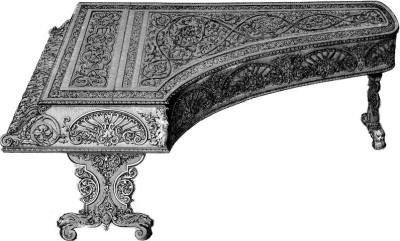
"Concert Grand Pianoforte
The International Exhibition of 1862, p. 109

LONDON - "Concert Grand Pianoforte with seven octaves, A to A, under-dampers, repetition action, and all the latest improvements, in solid rosewood case, elaborately carved. The case of this instrument was carved at Madras, East Indies : the designs and working drawings were sent from England by J. KIRKMAN & SON; the case was made, and the carvings executed, by the native workmen in the most correct manner. As a specimen of native Indian skilled labour it is interesting, as showing the ready capability of the native carvers to apply the art in which they excel to any purpose that may be required. The top of this pianoforte is made out of a solid piece of rosewood, without a joint; it is 5 feet wide, and even in India it is rare to meet with rosewood of such large dimensions. The piano is exhibited in the Indian Department." The International Exhibition of 1862, p. 109

&

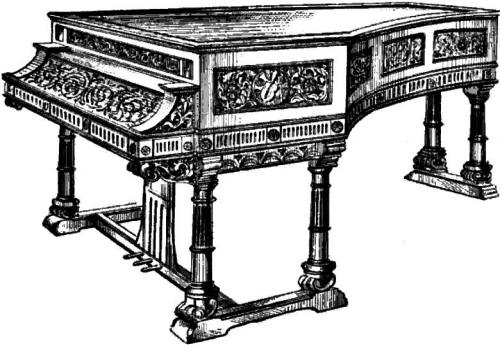
LONDON -"KIRKMAN'S PIANOFORTE. THE magnificent piano of which we give an Engraving is exhibited in the Indian department, by the eminent house of Joseph Kirkman and Son, of London. It is a 7-octave concert grand, with all the latest improvements. The designs and working drawing of this instrument were sent from England by Messrs. Kirkman, and the carving was executed at Madras, East Indies, by the native workmen. Messrs. Kirkman state that the whole work was executed in the most correct and perfect manner, without any error or mistake of any kind.

The case of the instrument is of solid East Indian rosewood; the carving is all grounded out, not laid on, and, considering this, it is done with surprising truth and accuracy. The whole design is harmonious, and is altogether the most successful attempt of a very difficult matter to decorate and ornament the irregular and, in fact, ugly and un manageable form of the grand pianoforte we have yet seen.

The form of the legs or trusses, and their connection with the pedal lyre and the side ornaments, is especially good; and the skill with which the ornament is adapted to the top of the in- strument, so as almost to conceal its irregu lar shape, reflects great credit on the though over five feet wide, is made of one solid piece of rosewood without a joint. Even in India it is extremely rare to meet with rosewood of such large dimensions.

This is the most elaborate and costly piano in the exhibition, and will well repay a visit. Besides the beauty of the case, the instrument itself is a remarkably fine-toned one. The Illustrated London News, 07/06/1862, p. 595


"Patent Improved Semi-Cottage Pianoforte, with seven octaves, A to A, and all the latest improvements, in ebony case richly carved and gilt." The International Exhibition of 1862, p. 110


"Concert Grand Pianoforte,
with seven octaves, A to A, repeating action, and underdampers, with new and improved up and down bearing bridges to preserve the sounding board in perfect aquilibrium, and prevent its sinking; in English pollard oak case richly carved and gilt." The International Exhibition of 1862, p. 110

"Patent Improved Trichord Semi-Cottage Pianoforte,
with seven octaves, A tot A; single action, English model, and all the latest improvements, in walnut, tulip-wood, and ebony case." The International Exhibition of 1862, p. 111

"Oblique Grand Pianoforte,
with seven octaves, A to A; grand check action, and under-dampers, with improved sounding board, in Amboyna-wood case carved and gilt." The International Exhibition of 1862, p. 111

LONDON - "3418 Kirkman J. & Son, 3, Soho-sq. — Pianofortes." International exhibition, 1862 : Official catalogue of the industrial department, 1862, p. 54

LONDON - "Having already referred generally to the musical instruments in the Exhibition, it is not necessary to dilate upon the excellence of the pianos exhibited by Messrs.

Kirkman and Son, of Solio Square; we introduce an illustration in order to show the beauty of the case merely—its exquisite tone is well known to all who had the pleasure of hearing it played upon.

The Oblique Grand was exhibited in the Indian Department. It was seven octaves, from A to A, with undcrdampers, repetition action, and all the latest improvements.

The rosewood case of this fine instrument was elaborately carved at Madras.

The designs and working drawings were sent from England by J. Kirkman and Son; the case was made, and the carvings executed, by the native workmen in the most correct manner.

As a specimen of the native Indian skilled labour it is interesting, as showing the ready capability of the native carvers to apply the art in which they excel to any purpose that may be required.

The top of this pianoforte is made out of a solid piece of rosewood, without a joint; it is five feet wide, and even in India it is rare to meet with rosewood of such large dimensions." Cassell's Illustrated Exhibitor: Containing about Three Hundred, 1862, p. 272

LONDON - "Messrs. Kirkman and Son show several fine pianofortes. The case of the Grand nearest the nave should be carefully examined; it is a magnificent specimen of parquetry." Cassell's Illustrated Exhibitor: Containing about Three Hundred, 1862, p. 46

LONDON - "Messrs. Kirkman and Son (3418), one of the oldest houses in the trade, exhibit a concert grand. in a handsome case, carved at Madras by Indian workmen; three other grands, and four upright pianos, exhibiting difi'erent varieties of manufacture.

They also show a new method of mounting the string of the grand on the back bridge. They receive a Medal for beauty of tone and general excellence of construction." Reports by the Juries on the subjects in the thirty-six classes into which ..., 1862, p. 148

LONDON - "Messrs. Kirkman in one of their grand pianofortes had a new bridge to prevent the sinking of the sounding-board, which is applied in a very scientific and thoroughly mechanical manner, and for certain classes of pianofortes must be a valuable improvement." The International exhibition. The industry, science, & art of the age, 1863, p. 150

LONDON - "Messrs. Kirkman and Son, who are the largest exhibitors of pianofortes in the exhibition, show a number of very beautiful pianos, all of the highest class. They exhibit no less than five grand pianofortes, two obliques, and two cottages.

Their carved grand in the Indian department we have already noticed. Their other pianos are a concert grand in fine walnut case with carved trusses; a concert grand in English pollard oak, richly carved and gilt; a drawing-room grand in amboyna, a rare and costly wood; and a boudoir grand, inlaid with parquetrie of various woods on a ground of amboyna.

This instrument, for beautiful work and high finish, is quite a gem in its way, and is an exquisite specimen of the class of work. The same firm exhibit an oblique pianoforte in walnut and one in amboyna, richly carved and gilt; a cottage pianoforte of very handsome design in ebony and gold; and a cottage pianoforte in walnut, inlaid with tulipwood and ebony, a very pure and chaste design in the Italian style.

In one of their grand pianofortes Messrs. Kirkman have a new bridge to prevent the sinking of the sounding-board, which is applied in a very scientific and thoroughly mechanical manner, and for certain classes of pianofortes must be a valuable improvement.

Whether for purity, richness, and equality of tone and excellence of touch, fine workmanship, or the elegance of the form of their pianos, the whole display of instruments by Messrs. Kirkman is most creditable to English pianoforte-making." The Illustrated London News, 14/06/1862, p. 616

1865

DUBLIN - "314 Kirkman, J. & Son 3 Soho sq. London, W. — Pianoforte." The illustrated record and descriptive catalogue of the Dublin international exhibition, 1865, p. 241

1867

PARIS - "Messrs. Kirkman exhibit two full grands, a "boudoir" grand," and a "piccolo ;" and too much praise can scarcely be awarded to this firm for the altogether admirable specimens which they have now placed before the public.

From English their full grand at 175 guineas, down to the piccolo at 48 pianos. guineas, the instruments are, one and all, excellent." Reports on the Paris Universal Exhibition, 1867, Volume 2, p. 199

PARIS - "Pianoforti a coda. - [...] Della casa Kirkman di Londra abbiamo suonato ed attentamente osservato due eccellenti pianoforti a coda; avevano bella ed eguale voce, la tastiera andava a puntino e tutto accusava un buon finitore ed un buon direttore in capo; ebbe in premio la medaglia d'argento." Il Pianoforte, guida pratica per costruttori, accordatori, etc., Sievers, 1868, p. 215

1872

LONDON - "A handsome instrument by Kirkman and Sons is brilliant and round in tone, the touch also is excellent." The Musical Standard: A Newspaper for Musicians, Professional and Amateur, 27/07/1872, p. 51

LONDON - "In Room No. 13 are three instruments by Messrs. Kirkman. One is a full-sized concert grand, one a boudoir grand, and one a semi-grand. It appears that Messrs. Kirkman have made great advancement in the manufacture of piano fortes. Metal frame-works have been generally adopted by the trade; they are of cast and wrought-iron.

The cast-iron frames are made in one or two pieces. Uncertainties surround the operation of casting, as the iron, when cooling, is apt to shrink unevenly or to curl, all of which incidents are inimical to the true fitting of the action and strings afterwards.

Messrs. Kirkman, appreciating the importance of these facts, have adopted steel as the material for the frames of their best and most expressive pianos.

As may be well known, steel is much lighter, harder, and more capable of precise mechanical manipulation than cast or wrought iron.

The advantages arising from employing this material are therefore apparent. The tone of this instrument is powerful, round, and even, while the action is well balanced, and enables the performer to obtain (as perfectly as any interposed mechanism will allow) nuances of expression as varied as the violinist produces out of his violin.

And here may be interposed that a greater perfection of mechanical fitting and of strength could be obtained if Messrs. Kirkman were to employ some new kind of steel invented by Sir Joseph Whitworth, who has entirely got rid of the air-holes which occur in steel castings. The semigrand piano is made upon a similar mode of construction as the grand. The boudoir grand is less expensive.

The frame-work is of cast-iron. All the internal mechanism is thoroughly well executed. Resembling the arrangement adopted on the Continent, the bass strings, to obtain the greatest length of string, are strung obliquely above the strings of the alto and treble clefs of the piano.

This arrangement is not satisfactory, since it generally affects the tone of the tenor clef, and unless some compensation is effected in the disposition of the sounding board, by which a kind of reaction may be created, a twangyness of tone is noticeable.

Messrs. Kirkman are to be congratulated on having surmounted this difficulty, since the tone of their boudoir grand piano is throughout even and pleasant.

The action of each of these three instruments is a “repetition” one, though, for the matter of that, a well-constructed action with a medium escapement and good check, provides, to an average pianist, the means of producing that repetition, which the soi-disant “repetition” action professes to do for the beginner or indolent performer." Journal of the Royal Society of Arts, 1872, p. 890-891

1879

SYDNEY - "KIRKMAN & SON, J. - London. - Upright Pianos.
Highly Commended.
Report-Good, sound, and serviceable instruments, well finished." Official Record of the Sydney International Exhibition, 1879, p. 427

SYDNEY - "Messrs. Kirkman & Son had also secured space, but as their exhibits cannot be got ready in time they have resolved to reserve them for Melbourne." Music Trades Review, 15/06/1879, p. 8

1884

CALCUTTA - "KIRKMAN AND Co., 3, Soho Square, London. - Grand and upright pianofortes,
with steel and iron frames." Official Report of the Calcutta International Exhibition ..., 1884, p. 12

1885

LONDON - "[...] and a splendidly decorated instrument, with the story of Orpheus painted by Mr. Edis, is shown by Messrs. Kirkman." The Monthly Musical Record, Volume 15, 01/08/1885, p. 169

International Inventions exhibition, South Kensington, London, 1885

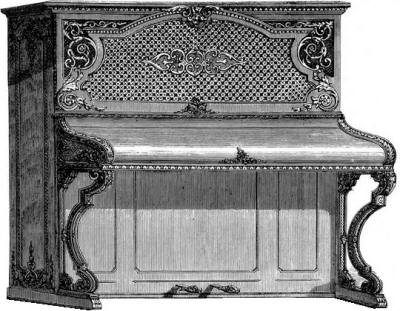
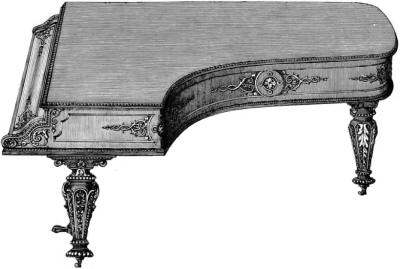
Fig. 1. - PIANOFORTE BY MESSRS KIRKMAN & Son.

LONDON - "At 3,576, Messrs. KIRKMAN & Son, Soho-square, exhibit a grand pianoforte-case in Italian walnut-wood from a design by Mr. R. W. Edis. The panels are of ebony, with figures carved in cameo in satinwood, and glued on. The carvings represent the story of Orpheus. There is good carving to the feet and brackets, and the lower part of the body of the case is ornamented with small futings.


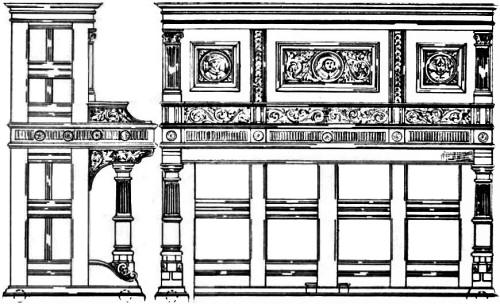
Fig. 2. - PIANOFORTE BY MESSRS KIRKMAN & Son.

The same firm exhibit a cottage case of similar style, also designed by Mr. Edis. The carved panels show medallion heads of celebrated musicians, the spandrels being carved with open scroll work. Both the pianofortes in question are illustrated in Figs. I and 2 on the present and the following page." The Furniture Gazette, 01/07/1885, p. 309 - See also ARTICLES 1885

LONDON - "KIRKMAN & SON. - Grand and Upright Pianoforte with steel and iron frames ; Harpsichords, &c." The Musical Standard: A Newspaper for Musicians, Professional and Amateur, 22/08/1885, p. 121

LONDON - "Messrs. Kirkman also make outward decoration a feature in their exhibits. One of the most noteworthy is a drawing-room grand in American walnut, with carved panels in satinwood on ebony, in imitation of cameos, designed by by Mr. R. W. Edis; and another is an upright grand, with medallion portraits of Schumann, LLiszt, and Chopin.

A speciality of this firm is the steel frame used for grands, which, it is claimed, secures greater purity of tone than the ordinary iron frame." The Athenaeum: Journal of Literature, Science, the Fine Arts, Music and ...,20/06/1885, p. 800

KIRKMAN
on this site

 
EXPOSITIONS
BIOGRAPHY
ARTICLES

Click on the links above

For more information and references see page
alfabetic K


 © Copyright all rights reserved