home
| Pianoforte-makers
in England
DUSSEK Johann Ludwig
in
London
(1760 - 1812)

MEMOIR OF JOHANN LUDWIG DUSSEK.
In no part of Europe are to be found individuals who excel them as
performers on wind-instruments ; and for the piano-forte, the names
of Dussek and Moscheles speak decisively as to their ability. During the seven years he remained there, he studied ancient and modern literature, but chiefly music, and profited much by the lessons of a Benedictine friar, who made him write every kind of exercise in counter-point. He had attained his nineteenth year, when he repaired to Brussels, and under the patronage of a gentleman at the court of the Stadtholder, gave a concert at the Hague in the presence of the whole court, which as much increased his reputation as his finances. Before he proceeded to Paris and Loudon, he determined on a journey to the north of Europe, and had the good fortune to become acquainted with the celebrated Emanuel Bach, at Hamburg. Hence he departed for Petersburg, but on his way, Prince C. Radzivill made him such advantageous proposals, that he could not resist them, and remained with this prince two years, in the heart of Prussian Lithuania. He then returned to Berlin, and after a short stay, went to Paris, where he remained a long time. At the beginning of the French revolution he discreetly quitted that metropolis, and set out with all speed for London, where he continued till 1800. During more than a ten years' residence in this country, he shone as the greatest piano-forte player that had ever been heard, and it is difficult to determine whether he has since been surpassed in grandeur, brilliancy, and delicacy of taste.
It is no ordinary praise of him to say, that many able judges have
ascribed in part the great refinement of Cramer to the many
opportunities he had of hearing his friend's exquisite performances
on an instrument that afforded them both so many triumphs, but has
never yet produced them an equal. He was in consequence obliged to leave England suddenly, and removed to Hamburg, where he remained above two years. He now repaired a second time to Berlin, and from a mere acquaintance, became the companion, and at last the intimate and confidential friena of Prince Louis Ferdinand of Prussia, who died so bravely for his country at Saalfeld, in 1806. This prince was weH known to possess more talents than any other member of his family, independently of his skill on the piano-forte, and his elaborate and clever compositions for that instrument. On the death of his royal associate, Dussek wrote a Sonata expressive of his feelings on the occasion, under the title of an "Elegy."
After a short engagement with the Prince of Isenburg, he entered
into the service of the celebrated Talleyrand, prince of Benevento,
in which he continued to the end of his life in 1812. But his permanent fame must rest on his greater works; amongst which he is said to have held in the highest estimation Op. 9,10, 14,42, Les adieuxa Clemenli, and Le Retour a Paris, called here, the plus ultra, in opposition to, or perhaps in ridicule of Woelfl's well-known" plus ultra." His three sonatas, Op. 35, dedicated to Clementi, have always appeared to us to be his best work, as combining a greater portion of originality, science, and effect.
His Fantasia and Fugue, inscribed to Cramer, is undoubtedly his most
learned production, and for the profound musician it has many
charms. There exists yet an Oratorio of his composition called the
Resurrection, the words by the great poet Klopstock; and a mass
which he wrote at Prague at the age of thirteen; but nothing is
known respecting their merits. LIST OF DUSSEKS CHIEF WORKS. Opera 1. Three Sonatas for the p.-forte or harp, with accompaniment for viol, and v.cello. 2. Three Ditto, for Ditto, and Ditto. 3. Three Ditto, for Ditto, and Ditto. 4. Three Ditto, for Ditto, and Ditto. 6. Grand Sonata. 6. "Petits Airs" with variations. 8. Three Sonatas. 9. Three Sonatas forp.-forte or harp, with accompaniment for viol, or'vcello. 10. Three Ditto, for Ditto, and Ditto. 11. Duet for two p.-fortes. 12. Three Sonatas, dedicated to Mrs. Cosway. 13. Three Ditto, dedicated to Miss Jansen. 14. Three Ditto, with popular airs. 15. Concerto in B flat, with Plough-Troy. 16. Three Sonatas with violin accompt. 17. Three Ditto, fcr Ditto, and Ditto. 18. Three Concertos. 19. Six Sonatinas for p.-forte and Violin. 20. Three Ditto, for Ditto. 21. The Rosary. 23. Concerto in B flat, dedicated to Miss Collins. 23. Three Sonatas, dedicated to the Baronnc de Dopff. 24. Sonata, dedicated to Mrs. Chinnery. 25. Three Sonntas, with Scotch airs. 26. Duet for two harps. 27. Concerto in p., dedicated to Mrs. Hyde. 28. Six easy Sonatas. 29. A Grand Concerto. 30. A Ditto Ditto. 31. Three Sonatas, and three Preludes, for p.-forte, and flute. 32. Grand Duo, a quatre mains. 33. Overture for two performers on one piano. 34. Two Sonatinas, for harp and flute. 35. Tre Grand Sonate, dedicate al Muzio Clementi. 36. Duet, for harp and piano. 37. Sonata, for harp, arranged for p.-forte, by Cramer. 38. Grand Duct, for harp and piano, or two pianos. 39. Three Sonatas, dedicated to Mrs. Aprecce. 40. Concerto Militaire, for p.-forte. 42. Fantasie and Fugue, dedicated to J. B. Cramer. 43. Sonata Harp, arranged for p.-forte. by Cramer. - 44. The Farewell, a Grand Sonata, dedicated to Clementi. 45. Three Sonatas, for p.-forte. 46. Six Easy Sonatas. 47. A Sonata. 48. Duet, dedicated to The Sisters. 49. Concerto, dedicated to Mr. and Mrs. Vidal. 50. Duet, arranged by Cramer. 51. Three Easy Sonatas, for p.-forte and flute. 58. A Quintett, p.-forte, &c. 61. Elegy on the death of Prince Louis. 62. La Consolation, an Andante for p.-forte. 67. Three progressive Sonatas, for four hands on p.-forte. Opera 68. Concerto Notturno. 70. Concerto in B flat, dedicated to Viotti. 71. Six airs with Variations. 78. Two easy Sonatas. 77. L' Invocation, Grand Sonata. 78. Posthumous-Rondo, for p.-forte. The above List is collected from English and Foreign Catalogues, from Gerber, &c.; but owing to a want of uniformity in numbering the works of authors, both here and Abroad, much error frequently ensues, and we tear that the foregoing is far from perfect." The Harmonicon, January 1825, p. 1-2
1863
That this distinguished professor at once came
to our House, may be accepted as proof of the estimation in which the firm
of Broadwood was held in Germany (as in Italy, where Dussek had travelled,
and where Clementi had not been chary of expatiating on its claims to
consideration); and that he should immediately take so deep an interest in
our instruments as to propose several important modifications, shows that
the qualifications they already possessed were such as to elicit the serious
attention of a man to whom the Pianoforte, as a medium of display, owed more
than to any other. It was he who first suggested to John Broadwood the
additional keys.
For these Dussek expressly composed concertos, sonatas, &c,
(among the rest his famous Military Concerto in B flat fl), which he played
with extraordinary success at his own concerts, and at other entertainments,
where, being the "lion" of his day, he was in continual request.
From the time of Dussek's improvements to a long period onwards —
with the exception of a mechanism invented by Sebastian Erard, of
Paris (in 1818), to facilitate the increased rapidity of execution
demanded by the works of more modern composers; and another
invention, with the same object, introduced somewhat later by John
Broadwood and Sons (an ingenious, although simple addition to the
still invaluable mechanism of old Backers) — nothing has since been
done to change, in any marked degree, the internal construction of
the Grand Pianoforte.
The
consideration of chief importance during the last quarter of a century, or
thereabouts, has related to the amount of power, and to the quality and
possible variety of tone, which, as practice taught more and more surely the
scientific use of weight ana percussion — the bearing of the hammers to the
strings, the solidity and the method of striking, the most convenient mode
of bracing, and the most efficient construction of the sounding board — have
advanced nearer and nearer to perfection.
The peculiar requirements of
modern pianoforte, music have induced manufacturers to pay especial
attention to the general action of the "dampers," and to the mechanical
appliances through which the "dampers" are controlled — the "loud pedal,"
which entirely neutralises the effect of the "dampers" (the object of the
latter being to arrest the vibrations of the strings when the fingers are
removed from the keys), and the "soft pedal," which, by shifting the
hammers to a single string, materially diminishes the volume of sound."
The Musical World, march 1863, p. 163
|
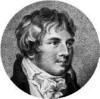
 "Johann Ludwig
Dussek, or, as his countrymen name him, Ladislaw Dussek, was born in
the year 1760, at Czaslau in Bohemia, a province which Dr. Burney
justly calls the most musical in Germany, and who adds that he knows
no country where the art is more generally and successfully
cultivated. The first-rate composers, however, — by which title we
mean to designate those who are renowned for invention and for
original genius, — have not been natives of Bohemia, the musical
fame of which rests on its executive, rather than on its creative
talent.
"Johann Ludwig
Dussek, or, as his countrymen name him, Ladislaw Dussek, was born in
the year 1760, at Czaslau in Bohemia, a province which Dr. Burney
justly calls the most musical in Germany, and who adds that he knows
no country where the art is more generally and successfully
cultivated. The first-rate composers, however, — by which title we
mean to designate those who are renowned for invention and for
original genius, — have not been natives of Bohemia, the musical
fame of which rests on its executive, rather than on its creative
talent. 
